From Reactive to Resilient: The Modern Utility Continuity Playbook
A practical framework for smaller utilities navigating the convergence of cyber threats, extreme weather, and rising regulatory expectations — and building the operational resilience to handle them.
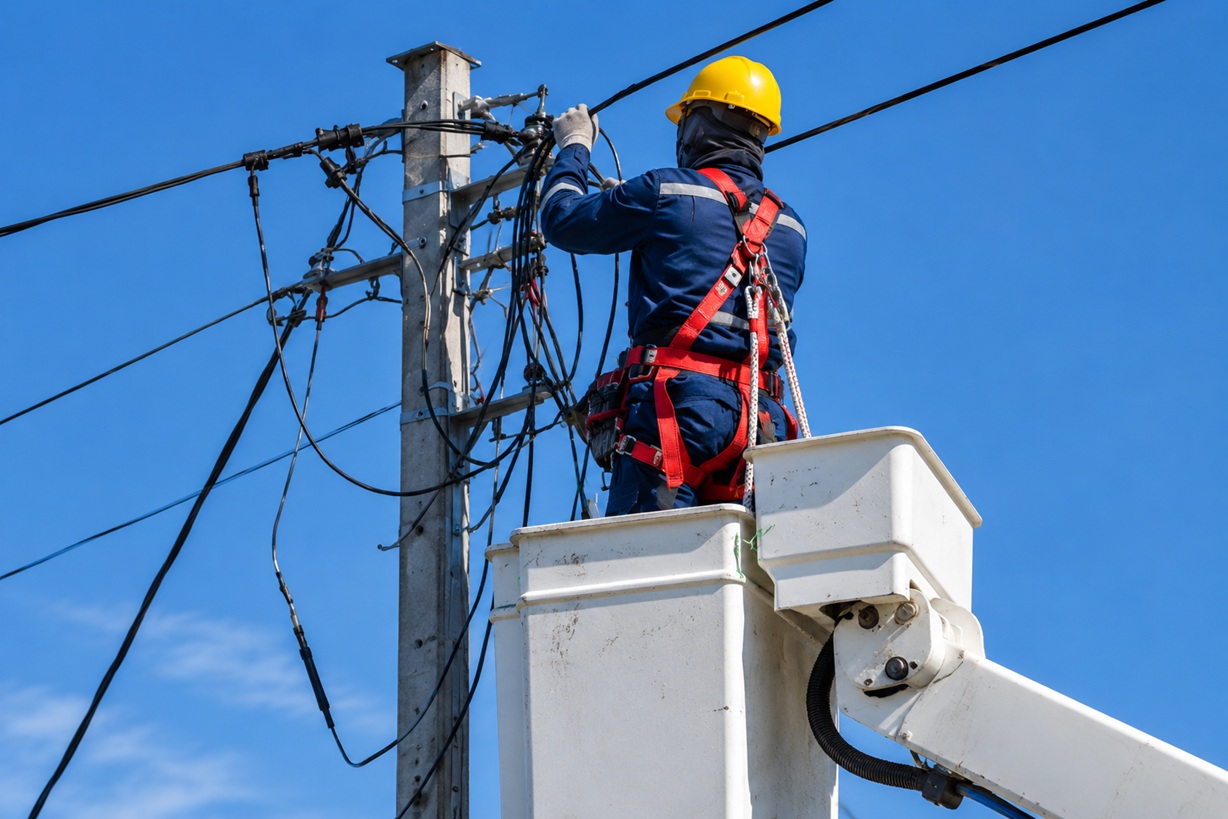
Smaller utilities — municipal electric departments, rural electric cooperatives, and smaller investor-owned utilities — face the same fundamental continuity risks as large utilities: severe weather, cyberattacks, equipment failure, and supply chain disruption. What differs is resourcing. Larger utilities can dedicate full-time staff to continuity planning; smaller utilities typically cannot. This piece lays out a practical way to think about utility BCP maturity and a path toward closing that gap.
A Way to Think About Utility BCP Maturity
Rather than treating "do you have a BCP" as a yes-or-no question, it's more useful to think of utility continuity planning as a spectrum. The following five-stage framework is a simplification, but it captures a pattern that shows up consistently when utilities examine their own posture honestly.
- Reactive — No formal plan, or a plan that exists only on paper and has never been exercised.
- Documented — A written BCP exists but is rarely updated and has not been tested against a realistic scenario.
- Managed — The plan is reviewed on a regular schedule and has been exercised at least once, but updates are manual and labor-intensive.
- Proactive — The plan is integrated with cyber incident response, tested against multiple scenario types, and updated on a trigger basis rather than purely a calendar basis.
- Resilient — Continuous monitoring and AI-assisted maintenance keep the plan current automatically; testing and scenario planning are routine, not exceptional.
Moving from one stage to the next is rarely about writing a longer document — it's about building the operational habits and tooling that keep a plan current without consuming disproportionate staff time.
The Five Pillars of Modern Utility Resilience
Moving from reactive to resilient requires building capability across five interconnected areas. These are not independent workstreams — strength in one without corresponding strength in the others creates false confidence.
- Operational Continuity — Core grid operations, dispatch, SCADA access, and restoration capability under disruption.
- Cyber Resilience — IT/OT security posture and incident response, integrated with the broader BCP rather than siloed from it.
- Stakeholder Communication — Customer, regulator, and mutual aid communication with pre-approved templates and clear escalation paths.
- External Partnerships — Mutual aid agreements and vendor protocols that are actually operational, not just signed and filed.
- Compliance & Documentation — NERC CIP, FERC, and state PUC alignment, plus the incident documentation that regulators expect after an event.
Where AI Fits in Utility BCP Maintenance
The primary barrier to moving up the maturity spectrum has historically been staff capacity. The practices that characterize the higher maturity stages — continuous plan maintenance, regular multi-scenario testing, integrated cyber-BCP frameworks — require time that most smaller utilities don't have to spare.
AI-powered planning platforms address this by automating the highest-effort, lowest-judgment elements of BCP maintenance, freeing limited staff time for the decisions that genuinely require human expertise:
What AI Can Support
- Drafting an initial plan from your utility's specific infrastructure and operational profile
- Flagging plan sections likely affected by a staffing, vendor, or equipment change
- Generating scenario materials and facilitator guides for tabletop exercises
- Monitoring for NERC CIP, FERC, and state PUC regulatory developments relevant to your plan
As with any compliance tool, the output still requires review by someone who understands the utility's actual operations — AI accelerates the drafting and monitoring work, it doesn't replace the judgment call.
A Practical Starting Roadmap
For a utility looking to move up the maturity spectrum, a structured approach over a defined period tends to work better than an open-ended improvement initiative. A reasonable way to sequence the work:
First, assess. Conduct a BCP audit against the five-pillar framework above. Identify which pillars are weakest. Verify all emergency contacts are current.
Then, integrate. Connect your BCP with your cyber incident response plan. Build out response protocols for your most likely disruption scenarios — major storm, ransomware, equipment failure. Pre-approve communication templates before you need them.
Finally, test and embed. Run your first tabletop exercise. Document findings and remediate gaps. Establish an ongoing maintenance routine with clear ownership, rather than treating the plan as a one-time project.
Ready to build your risk management plans?
Plan & Recover generates industry-specific, regulation-ready business continuity plans in hours. Your first plan is free.